Tactical belt – what is it? Simply put, it's a reinforced belt on which you can attach various accessories: magazine pouches, a pistol holster, a first aid kit, a knife, a flashlight... Everything you need to have at hand, especially in dynamic situations. A well-chosen tactical belt is the foundation of every shooter's equipment, regardless of whether they train at the shooting range, participate in competitions, or work in the uniformed services.
Tactical Belt: Your Reliable Partner on the Shooting Range and in the Field
A tactical belt is a piece of equipment that may seem like an ordinary belt at first glance. Nothing could be further from the truth! It's an advanced carrying system designed for maximum functionality, durability, and user comfort. It allows you to carry essential equipment in an organized, safe, and easily accessible manner. This allows the shooter to focus on the task at hand, rather than searching for needed accessories.
Tactical belts have gained popularity due to their versatility and ability to be tailored to the individual needs of the user. From sports shooters to hunters to uniformed service officers – everyone will find a model that meets their expectations. The key is understanding what your priorities are and what kind of equipment you will be carrying on the belt. A different belt will work for dynamic IPSC competitions, and a different one for hunting in difficult terrain.
What is a Tactical Belt Made Of? Construction and Materials
A tactical belt is not just a piece of material. It's a complex structure, in which each element has its own task. Here are some key components:
- Belt core: Usually made of ballistic nylon or other durable material. It is responsible for the stiffness and load-bearing capacity of the belt.
- Padding: Provides wearing comfort, especially during prolonged use. It can be made of foam, mesh, or other breathable materials.
- Mounting system: Most often it is the MOLLE/PALS system (Modular Lightweight Load-carrying Equipment/Pouch Attachment Ladder System), which is a series of horizontal straps to which you can attach pouches, holsters and other accessories. An alternative is the Velcro system, which allows for quick and easy attachment.
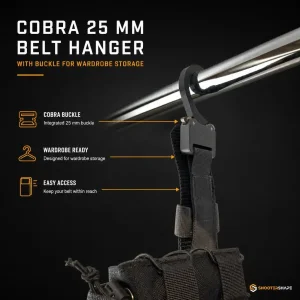
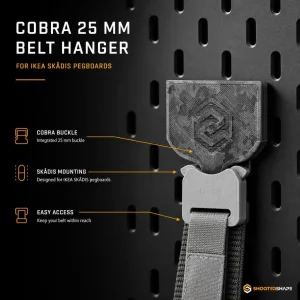
- Buckle: Must be durable and reliable. The most popular are buckles made of metal (e.g. Cobra®) or high-strength plastics.
The materials used to produce tactical belts must be resistant to mechanical damage, abrasion, weather conditions, and intensive use. Ballistic nylon, Cordura, and various types of polymers are most commonly used.
Types of Tactical Belts: Which One to Choose?
Various types of tactical belts are available on the market, differing in construction, purpose, and functionality. Here are some of the most popular:
- Single-layer belts: Simple and lightweight, ideal for carrying a small number of accessories. They will work well during training at the shooting range or in competitions where speed and mobility are important.
- Double-layer belts: Consist of an inner belt (worn on trousers) and an outer belt (on which accessories are attached). They provide better stability and wearing comfort, especially with a heavier load.
- Modular belts: Equipped with the MOLLE/PALS system, allowing you to freely configure your equipment. This is the most versatile type of tactical belt, which can be adapted to various needs.
- Battle belts: Wider and more extensive than traditional tactical belts. They provide excellent weight distribution and high wearing comfort, even with a heavy load. Often equipped with additional side panels and suspenders.
The choice of the appropriate belt depends on your individual needs and preferences. Consider what accessories you will be carrying on the belt, in what conditions you will be using it, and what level of comfort is most important to you.
How to Properly Configure a Tactical Belt? Practical Tips
Buying a belt is just the beginning. Equally important is its proper configuration, i.e. arranging accessories in an ergonomic and functional way. Here are some tips that can help you:
- Priorities: Place the most important accessories (e.g. pistol holster, magazine pouches) in places that are easiest for you to access.
- Ergonomics: Arrange accessories so that they do not restrict your freedom of movement and do not cause discomfort when walking, running or kneeling.
- Balance: Try to distribute the weight evenly on both sides of the belt to avoid overloading one side.
- Safety: Make sure that all accessories are securely attached to the belt and there is no risk that they will fall out during dynamic movement.
Tactical Belt and Legal Regulations. Do You Need a Permit?
Possessing a tactical belt itself does not require a permit. The problem arises when we want to carry a weapon on it. In Poland, in order to legally carry a weapon (e.g. a pistol), you must have a weapon permit. This also applies to situations where the weapon is carried in a holster on a tactical belt. Remember that illegal possession of a weapon is a crime!
Accessories Worth Having on a Tactical Belt
In addition to basic accessories, such as a pistol holster and magazine pouches, you can carry many other useful items on a tactical belt. Here are some suggestions:
- First aid kit: Essential in any emergency. It should contain basic dressings, painkillers, and other necessary materials.
- Tactical knife: Useful for many tasks, from cutting ropes to opening packages. Choose a model with a solid construction and a sharp blade.
- Tactical flashlight: Indispensable when operating in low light conditions. Choose a model with high power and a durable housing.
- Multitool: A universal tool that combines many functions (e.g. knife, pliers, screwdriver).
- Shotgun shell holder: If you are using a shotgun, it is worth having a shell holder on the belt.
- Tactical whistle: A simple but effective way to call for help in an emergency.
Tactical Belt – An Investment in Safety and Comfort
In summary, a tactical belt is not only a fashionable accessory, but above all a functional and practical tool that can significantly improve your safety and comfort when shooting, hunting or performing official duties. By choosing the right model and configuring it in a thoughtful way, you will gain a reliable partner that will make it easier for you to access the necessary equipment in any situation.
Frequently Asked Questions
Do I need a permit to own a tactical belt?
No, owning a tactical belt itself does not require any permit. However, carrying a weapon on it may be a problem – an appropriate permit is required for this.
What type of tactical belt will be best for a beginner shooter?
For beginner shooters, we recommend double-layer or modular belts. They provide good stability and wearing comfort, while allowing easy adaptation to individual needs.
How to properly choose the size of a tactical belt?
The size of the tactical belt is selected based on the waist circumference, measured where you will wear the belt. Most manufacturers provide size charts that make it easier to choose the appropriate size.
Is a tactical belt only suitable for carrying weapons?
No, a tactical belt can be used to carry various types of accessories, such as first aid kits, knives, flashlights, multitools and many others. It all depends on your needs and preferences.
What material should a good tactical belt be made of?
The best tactical belts are made of durable materials, such as ballistic nylon or Cordura. These materials are resistant to mechanical damage, abrasion and weather conditions.
Can I wash a tactical belt in the washing machine?
We definitely do not recommend washing the tactical belt in the washing machine. This may damage its structure and properties. It is best to clean the belt by hand, using mild detergents and lukewarm water.
Where to buy a good tactical belt?
Tactical belts can be bought in military stores, outdoor equipment stores and online stores. Choose only proven brands and models to be sure that the belt will meet your expectations.
How to care for a tactical belt to make it last as long as possible?
Regularly clean the belt from dirt and dust. Avoid exposing it to prolonged sunlight and moisture. Store the belt in a dry and airy place.