Training in shooting is not just regular visits to the shooting range. It is a comprehensive process of improving skills, encompassing both technical and mental aspects. A properly planned and executed training allows you to achieve a higher level of accuracy, reaction speed, and overall shooting proficiency.
Shooting Training – What Does It Actually Mean?
Simply put, shooting training is a collection of exercises and practices aimed at improving your weapon handling skills. It's not just about hitting the target – although that's obviously an important element. It's about doing it repeatedly, quickly, and safely. Good training includes both dry fire exercises and live shooting at the range, as well as elements of physical and mental preparation.
Imagine you are a rally driver. Just having a fast car isn't enough, is it? You have to practice driving technique, learn the tracks, react to changing conditions. It's the same in shooting – the equipment alone is not everything. What matters is **training**, which will allow you to fully exploit its potential.
Why is Shooting Training Important?
- Safety: Regular training reinforces safe weapon handling habits. This is crucial both on and off the range.
- Accuracy: The more you practice, the better you control the weapon and the more precisely you hit the target. This is obvious, but it's worth emphasizing.
- Speed: Training allows you to shorten reaction time and shoot accurately faster. This is important in many shooting disciplines, as well as in self-defense situations.
- Confidence: Good preparation translates into greater self-confidence and less stress in stressful situations.
- Fun: Let's not forget the pleasure of improving your skills and achieving better and better results.
Types of Shooting Training
Shooting training can be divided into several basic types, depending on the purpose and methodology:
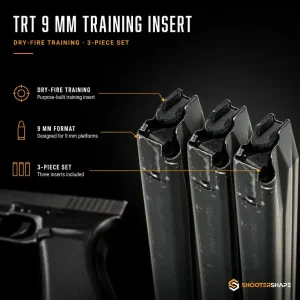
Dry Fire Training
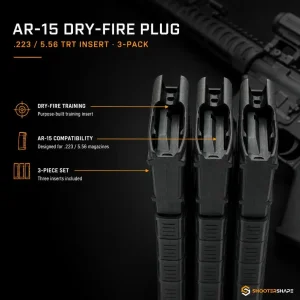
These are exercises performed without ammunition, aimed at improving technique, grip, stance, and sight alignment. Dry fire is a great way to **train** at home, without having to go to the shooting range. Just remember to follow safety rules and use snap caps.
Live Fire Training
That is, simply shooting at a target. It allows you to test your skills in real conditions and improve accuracy, speed, and recoil control. Remember to use hearing protection and ballistic glasses.
Conditioning Training
Shooting is a sport that requires not only precision but also endurance and strength. Regular physical exercise improves stability, breath control, and overall fitness, which translates into better results at the range. Exercises that strengthen the core are particularly useful.
Mental Training
This is working on concentration, coping with stress, and visualization. The ability to control emotions and focus on the goal is crucial, especially in shooting competitions.
Accessories Useful in Shooting Training
There are many accessories that can facilitate and diversify shooting **training**. Here are a few examples:
- Snap caps: Training rounds that protect the firing pin during dry fire exercises.
- Shooting timer: Measures reaction time and shooting time, allowing you to monitor progress.
- Shooting targets: Different types of targets, adapted to different shooting disciplines.
- Shooting mat: Provides comfort and stability when shooting in the prone position.
- Tactical belt and magazine pouches: Enable quick and efficient reloading of the weapon.
- Foregrip: Improves weapon control and reduces recoil.
- Red dot sight or scope: Facilitate aiming and increase accuracy.
How to Effectively Plan Shooting Training?
Effective shooting **training** requires planning and consistency. Here are some tips on how to do it:
- Set a goal: What do you want to achieve? Improve accuracy, speed, or maybe prepare for a competition?
- Identify your weaknesses: Identify the elements that need improvement.
- Choose the right exercises: Tailor the exercises to your goals and weaknesses.
- Set a schedule: Regularity is key. Train regularly, even if you only have a few minutes a day.
- Monitor progress: Record your results and analyze them. This will help you identify areas where you are making progress and those that need more work.
- Be patient: Improving shooting skills takes time and effort. Don't be discouraged if you don't see immediate results.
Remember that shooting **training** is a process of continuous improvement. There is always something that can be improved. Be open to new methods and techniques, experiment, and above all – enjoy shooting!
Frequently Asked Questions
How often should I train shooting to see results?
The frequency of training depends on your goals and time availability. Even short but regular sessions (e.g., 15-30 minutes of dry fire several times a week) bring better results than sporadic, long training sessions. Ideally, you should train shooting 2-3 times a week, combining dry fire with visits to the shooting range.
Is dry fire training safe?
Yes, provided that safety rules are followed. Always make sure the weapon is unloaded and the ammunition is stored in a safe place. Use snap caps to protect the firing pin. Focus and treat dry fire as if you were shooting live ammunition.
What are the best dry fire exercises for beginners?
Start by focusing on the basics: correct grip, stance, sight alignment, and smooth trigger pull. Practice aiming at a specific point, repeat the loading and magazine exchange movement. You can use magnetic magazine holders to always have them on hand.
Do I need special accessories for shooting training?
Some accessories, such as snap caps, a shooting timer, or a shooting mat, can make training easier and more varied, but they are not necessary. The most important thing is the right weapon, a safe place to train, and a willingness to learn.
How to measure progress in shooting training?
You can measure progress in several ways: record the results on the target, measure reaction time and shooting time, monitor the number of accurate hits. You can also record your training sessions and analyze them to identify errors and areas that need improvement.
Is shooting training expensive?
The cost of shooting training depends on many factors, such as the frequency of visits to the shooting range, the type of ammunition, and accessories. Dry fire is a cheap way to train at home. You can also look for cheaper options, such as shooting with .22 LR ammunition from a Ruger 10/22 rifle.
How to find a good shooting instructor?
Look for an instructor with experience and appropriate qualifications. Ask about his training methods and references. It is important that the trainer can adapt the training to your individual needs and goals.