Shooting is a sport and skill that requires continuous improvement. Unfortunately, regular visits to the shooting range generate costs associated with ammunition and time. Fortunately, there is a method that allows for effective training in the comfort of your own home - dry fire. Dry fire is not only a cost-saving measure but, above all, an opportunity to focus on the key elements of shooting technique. It is an excellent complement to "live fire" training, and for many shooters, it is the basis for regularly honing their skills.
In this article, we will show you how to effectively use dry fire in pistol training. We will discuss safety rules, necessary equipment, effective exercises, and ways to monitor progress. Whether you are a beginner shooter or an experienced competitor, you will find valuable tips here that will help you take your shooting skills to the next level. Remember that the key to success is consistency and a conscious approach to training.
Safety First – the Fundamental Principle of Dry Fire
Before we move on to specific exercises, we must emphasize the absolute priority - safety. Dry fire training, although it takes place without ammunition, requires strict adherence to rules to avoid tragic consequences. Treat the weapon as if it were loaded, even if you are sure it is not. This is the basis of a correct approach to weapons.
- Check the weapon: Make sure the weapon is unloaded. Remove magazines and check the chamber several times.
- Safety zone: Choose a safe place to train, where the pistol's barrel will always be pointed in a safe direction (e.g., into a thick wall with no windows facing outwards).
- No ammunition: Remove all ammunition from the room where you are training. This will prevent accidental loading of the weapon.
- Concentration: Focus solely on training. Eliminate any distractions, such as a phone or television.
Essential Equipment for Effective Dry Fire Training
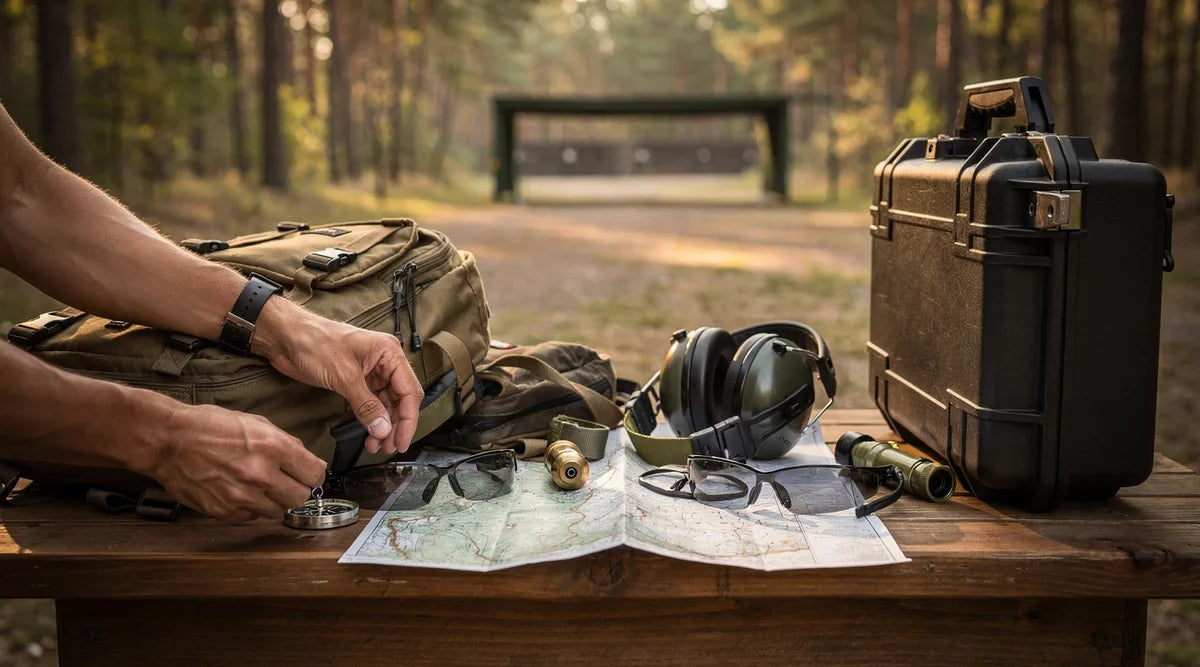
You don't need many accessories for dry fire training, but a few of them can significantly increase its effectiveness:
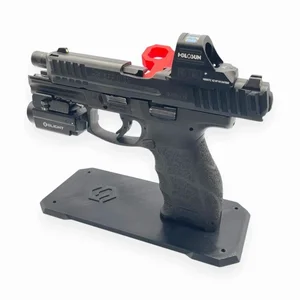
- Pistol: Preferably the one you use every day at the shooting range. Glock 17, CZ P-10C, or SIG Sauer P320 are popular choices.
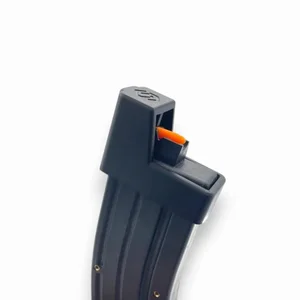
- Magazines: Several magazines will allow you to practice magazine changes.
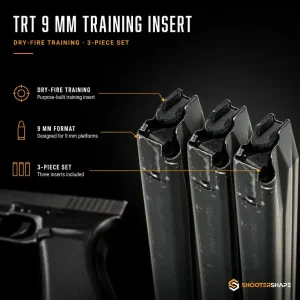
- Snap caps: Protect the firing pin from damage, especially in pistols where dry fire is not recommended without the use of snap caps. Choose the appropriate caliber, e.g., 9mm.
- Targets: You can use shooting targets, but plain sheets of paper with a target drawn on them will suffice to begin with.
- Timer: A shooting timer will allow you to measure reaction time and practice speed. A smartphone app will also work.
- Mirror: Allows you to observe posture and grip.
Dry Fire Exercises – From Basics to Advanced Techniques
Here are some exercises you can include in your dry fire training plan:
1. Perfecting the Grip
A proper grip is the foundation of accurate shooting. Practice gripping the pistol, paying attention to:
- Grip height: Grip the pistol as high as possible to reduce muzzle flip.
- Grip strength: Use a firm but not excessive grip. Too tight a grip causes trembling.
- Consistency: Always grip the pistol in the same way.
2. Smooth Drawing of the Weapon
Quick and smooth drawing of the weapon from the holster is crucial in dynamic situations. Practice:
- Hand position: Before reaching for the weapon, make sure your hand is positioned correctly.
- Drawing angle: Draw the weapon at the correct angle to avoid snagging on the holster.
- Connection with the grip: When drawing the weapon, immediately switch to the correct grip.
3. Sight Alignment
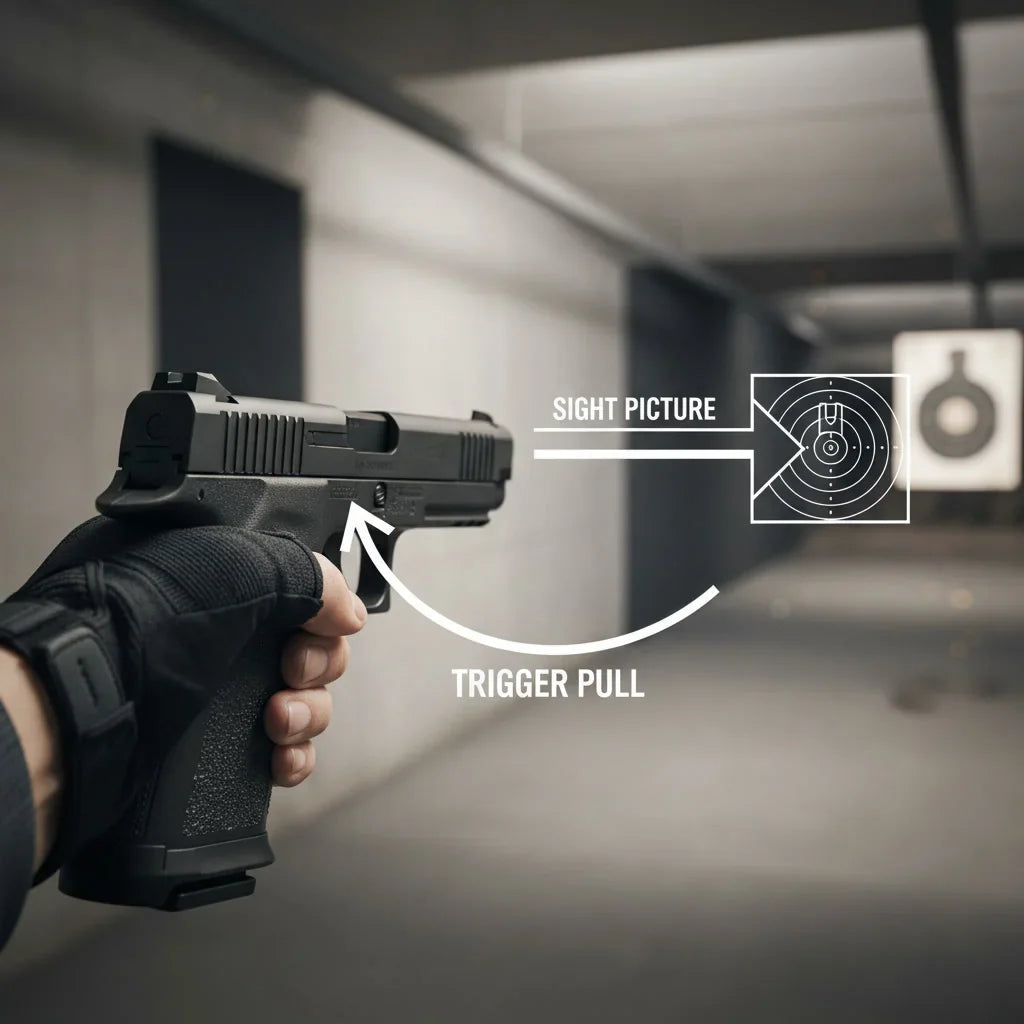
Practice smooth and quick sight alignment (front and rear sights). Focus on:
- Front sight sharpness: The front sight should be sharp, and the rear sight and target should be blurred.
- Even light: Make sure there is the same amount of light on both sides of the front sight in the rear sight notch.
- Consistency: Always align the sights in the same way.
4. Trigger Pull
Smoothly pulling the trigger without moving the weapon is one of the most difficult skills. Practice:
- Finger isolation: Focus on moving only the index finger.
- Straight-line movement: Pull the trigger straight back.
- Breaking point: Feel the breaking point and try to control it.
5. Magazine Changes
Quick magazine changes are essential in stressful situations. Practice:
- Magazine position: Make sure the magazine is positioned correctly in your hand.
- Insertion direction: Insert the magazine with a confident movement, in the appropriate direction.
- Release lever: Operate the magazine release lever efficiently.
How to Monitor Progress in Dry Fire?
Regular monitoring of progress will help you stay motivated and identify areas that need improvement. You can do this in several ways:
- Video recording: Record your training sessions and analyze errors.
- Timer: Measure the time it takes to perform individual exercises.
- Training log: Record your results and observations.
- Consultations with an instructor: Ask an experienced instructor to evaluate your technique.
Remember to be Regular!
Dry fire training yields the best results when performed regularly. Even short, 15-minute sessions several times a week can significantly improve your shooting skills. Find time for dry fire and treat it as an integral part of your training plan.
Frequently Asked Questions
Can dry fire damage my pistol?
In most modern pistols (e.g., Glock, CZ P-10C), dry fire does not cause damage, but in some models (e.g., older designs), the firing pin may be damaged. Using snap caps minimizes the risk of damage.
How often should I practice dry fire?
You will achieve the best results by training regularly, even for a short time. 15-30 minutes several times a week is a good start. Consistency is more important than the length of a single session.
Will dry fire replace range training?
No, dry fire will not replace range training. It is a supplement that allows you to improve technique and build muscle memory. Range training is necessary to test skills in real conditions and work on elements that cannot be trained dry (e.g., recoil control).
Can I practice dry fire with a loaded magazine?
Never practice dry fire with a loaded magazine. Always make sure the weapon is unloaded and remove all ammunition from the room.
Do I need special tools for dry fire?
No, for basic dry fire training, a pistol, snap caps, and a target are sufficient. Additional accessories, such as a timer or mirror, can increase the effectiveness of the training.
What are the most common mistakes in dry fire training?
The most common mistakes are lack of concentration, failure to follow safety rules, irregularity, and lack of monitoring of progress.
Is dry fire effective?
Yes, dry fire is a very effective training tool that allows you to improve shooting technique, build muscle memory, and save ammunition costs. The key to success is consistency and a conscious approach to training.