A cable lock is simply a basic device for securing a firearm, most often in the form of a steel cable locked with a key or combination. Its main purpose is to prevent loading and firing, protecting against accidental or unauthorized use.
What exactly is a cable lock and why is it important?
A cable lock is a mechanical security device that physically blocks the use of a firearm. It usually consists of a steel cable that passes through the chamber, magazine, or other key elements of the firearm, and a lock that is secured with a key or code. Its main goal is to increase safety and prevent accidents and thefts.
Why is a cable lock so important? First of all, it provides an additional layer of security, especially in homes where unauthorized individuals, such as children, may have access to firearms. Secondly, in many countries and states, owning a cable lock is required by law when storing firearms. Thirdly, a cable lock makes it more difficult to steal a firearm and use it for criminal purposes.
How does a cable lock work? Simple mechanism, huge benefits
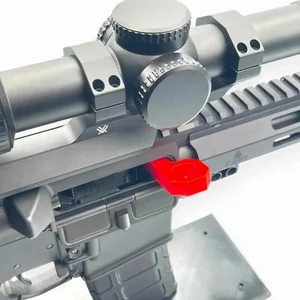
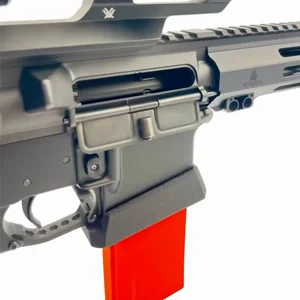
The principle of operation of a cable lock is extremely simple. The steel cable is threaded through critical points of the firearm, such as the chamber, the magazine well (e.g., in an AR15), or the ejection port. Then, the ends of the cable are connected with a lock, which blocks its removal. This prevents loading the firearm, inserting the magazine, or firing.
Thanks to its simplicity, a cable lock is easy to use and can be quickly installed and removed. It does not require any special tools or skills. And most importantly, it effectively protects the firearm from unauthorized use.
Types of cable locks: key vs. combination
There are two basic types of cable locks available on the market:
- Key locks: A traditional solution, where a key is required to open the lock. Simple and reliable, but requires storing the key in a safe place.
- Combination locks: Opened with a combination of digits. Eliminates the need to carry a key, but you have to remember the code. Some models offer the ability to change the code, which increases security.
The choice between a key lock and a combination lock depends on individual preferences. It's important to choose a lock made of solid materials, resistant to attempts to force it open.
Application of cable locks in various types of firearms
Cable locks are universal and can be used in various types of firearms:
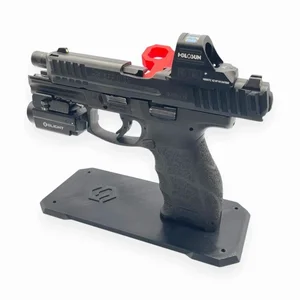
- Pistols: The cable lock passes through the chamber and ejection port.
- Rifles: The cable is threaded through the chamber and the magazine well.
- Shotguns: The lock blocks access to the chamber.
- Revolvers: The cable passes through the cylinder window.
Regardless of the type of firearm, it is important that the cable lock is properly installed, according to the manufacturer's instructions. Make sure the cable is taut and the lock is securely fastened.
Where to buy a cable lock and what to look for?
Cable locks are available in gun stores, sporting goods stores, and online. When choosing a lock, it's worth paying attention to a few key aspects:
- Material: The cable should be made of hardened steel, resistant to cutting.
- Lock: The lock mechanism should be solid and reliable.
- Certifications: It's good if the lock has certifications confirming its quality and safety.
- Cable length: Choose a lock with a cable of the appropriate length to fit your firearm.
Remember that a cable lock is only one element of safety. It is also important to store firearms properly in a safe or gun cabinet and to receive regular training in safe gun handling.
Cable lock and legal regulations – what you need to know?
In some countries and states, there are legal regulations governing the storage of firearms. It is often required that firearms be secured against access by unauthorized persons, e.g., by using a cable lock or storing them in a safe. It is always worth checking local regulations to make sure you are complying with applicable requirements.
Frequently Asked Questions
Is a cable lock sufficient firearm security?
A cable lock is a good additional security measure, but it does not replace a safe or gun cabinet. It is best to use it in conjunction with other security methods.
How to properly install a cable lock?
Thread the cable of the lock through the chamber or magazine well, and then fasten the lock. Make sure the cable is taut and the lock is securely fastened. Always follow the manufacturer's instructions.
Does a cable lock fit every firearm?
Cable locks are universal and fit most types of firearms, but it is worth checking the length of the cable before buying to make sure it will be suitable for your firearm.
Do I need to carry the key to the cable lock with me?
If you are using a key lock, it is best to store the key in a safe place, separately from the firearm. Do not carry the key with you to avoid the risk of losing or stealing it.
Does a cable lock protect against firearm theft?
A cable lock makes firearm theft more difficult, but it is not an insurmountable obstacle. A professional thief can cut or destroy it. Therefore, it is also important to store firearms properly in a safe or gun cabinet.
Can I use a cable lock when transporting a firearm?
In some countries and states, it is required that firearms be secured during transport, e.g., with a cable lock or in a closed case. Always check local regulations before transporting a firearm.
How often should I check the condition of the cable lock?
Regularly check the condition of the cable lock to make sure the cable is not damaged and the lock mechanism is working properly. Replace the lock with a new one if necessary.
Is a cable lock expensive?
Cable locks are relatively inexpensive. You can buy them for as little as a few dozen zlotys. The price depends on the material, quality of workmanship, and type of lock.
Does a cable lock make cleaning the firearm difficult?
Yes, a cable lock can make cleaning the firearm difficult. It should be removed before cleaning. After cleaning and maintenance of the firearm is complete, the lock can be reinstalled.