Dry-Fire, also known as "dry practice," is a simulation of firing a firearm without using ammunition. It may sound like pretending, but believe me – it's a very serious and effective training method. It allows you to refine your shooting skills, build muscle memory, and improve your results without having to visit the shooting range and spend money on ammunition. You'll soon see that it's more than just "pretending".
Dry-Fire: What does it actually mean?
Simply put, dry-fire is practicing all the elements that make up firing a shot, without the actual firing of the shot. This includes:
- Adopting the correct stance
- Gripping the weapon
- Aligning the sights (or the image in the collimator)
- Smoothly pulling the trigger
- Controlling breathing
- Analyzing the "shot"
You do all this without putting a cartridge into the chamber. Instead of the bang and recoil, you have focus and precision. Thanks to this, you can practice at home (while observing all safety rules, of course!) and spend more time improving your technique.
Why is Dry-Fire so popular? Benefits of dry practice
Dry-fire has gained popularity for several reasons:
- Savings: Ammunition costs money, and dry-fire is free. You can practice as much as you want, without worrying about your wallet.
- Accessibility: You don't have to go to the shooting range. You practice at home, when you have time. Of course, observing all safety rules.
- Focus on technique: The lack of bang and recoil allows you to focus on each element of the shot, eliminate errors, and develop correct habits.
- Improved results: Regular dry-fire translates into better results on the shooting range. Accuracy, speed, and confidence increase.
- Safety: Safe training, if you follow the rules. Always treat the weapon as loaded and make sure there is no ammunition in the room.
Dry-fire is the foundation of the training of many professional shooters. It allows you to develop perfect technique and achieve mastery.
How to start Dry-Fire training? A step-by-step guide
Before you start, make sure you know and understand the rules of safe gun handling. Dry-fire, although without ammunition, still requires responsibility. Here are the steps you should take:
- Choose a safe place: This is a room where there is no ammunition and where you are sure that you will not harm anyone. Make sure that there are no people or valuable objects behind the target (e.g. the wall).
- Check the weapon: Make sure the weapon is unloaded. Remove the magazine, check the chamber. Do it twice.
- Use a safety flag: Insert it into the chamber to visually confirm that the weapon is empty.
- Prepare a target: You can use a shooting target, a sticker, or another clear point on which you will focus while aiming.
- Practice: Focus on each element of the shot. Stance, grip, aiming, trigger pull. Repeat until you feel like you're doing it automatically.
- Analyze: After each session, think about what you can improve. Record yourself, ask someone to observe.
Remember, consistency is key. Even 15-20 minutes a day will bring better results than sporadic, long sessions.
Dry-Fire accessories: What might be useful?
Although dry-fire doesn't require expensive equipment, a few accessories can make training easier and more varied:
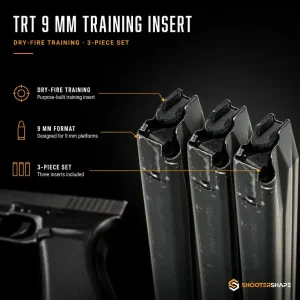
- Snap caps (training rounds): Protect the firing pin from damage during "dry" firing. They are especially important in some weapon models.
- Laser trainers: You insert a laser trainer into the chamber, which emits a laser beam when the trigger is pulled. You can then practice aiming and observe the point of impact on the target.
- Dry-fire apps: There are smartphone apps that analyze your training, measure reaction time and accuracy.
- Targets: The more different targets you have, the more varied and engaging the training.
Dry-Fire vs. blank ammunition: what is the difference?
It is important to distinguish dry-fire from using blank ammunition. Blank ammunition contains a powder charge that generates a bang and recoil but does not fire a projectile. Using blank ammunition during training at home is dangerous and unnecessary. Dry-fire focuses on technique, not on simulating a real shot.
Example Dry-Fire exercises: Where to start?
Here are a few simple exercises you can do at home:
- Grip exercise: Draw the weapon (unloaded!), focus on the correct grip. Repeat until you feel that the weapon is lying firmly and stably in your hand.
- Sight alignment exercise: Focus on aligning the rear sight, front sight, and target. Practice smoothly transitioning from one target to another.
- Trigger pull exercise: Gently and smoothly pull the trigger, observing whether you are moving the weapon.
- Drawing exercise: Practice quickly and smoothly drawing the weapon from the holster. Remember the safety rules!
Dry-Fire in various shooting disciplines: What does it look like?
Dry-fire is used in various shooting disciplines, from IPSC to precision shooting. In each of them, emphasis is placed on different aspects of the technique. For example:
- IPSC: Speed and precision. Exercises focus on quickly drawing the weapon, dynamically transitioning between targets, and quickly pulling the trigger.
- Precision shooting: Focus and control. Exercises focus on perfect sight alignment, breath control, and minimizing vibrations.
- Dynamic shooting: Combination of speed and precision. Exercises include elements of both of the above disciplines.
Dry-Fire and legal regulations: Is it legal?
Possessing a weapon itself (provided you have a permit for it) and performing dry-fire training at home is legal. However, it is important to follow safety rules and not create a threat to yourself and others. Remember that firearms regulations are complex and may vary depending on the country and region. If in doubt, consult a lawyer or the local authority responsible for firearms control.
Summary: Dry-Fire is your ally
Dry-fire is an effective and accessible way to improve your shooting skills. It does not require large financial or time expenditures. Regular dry practice allows you to develop correct habits, increase accuracy and confidence. Just remember about safety and a responsible approach. Good luck!
Frequently Asked Questions
Can dry-fire damage my weapon?
Regular "dry" firing may, in some weapon models, damage the firing pin. Therefore, it is worth using snap caps (training rounds), which cushion the impact and protect the firing pin.
How often should I practice dry-fire to see results?
Even 15-20 minutes a day, regularly, will bring better results than sporadic, long sessions. Consistency is key.
Can I practice dry-fire with a weapon for which I do not yet have a permit?
No. You can only practice dry-fire with a legally owned weapon.
Where can I buy dry-fire accessories?
Accessories such as snap caps, laser trainers, and targets can be found in stores selling weapons and shooting accessories, both stationary and online.
What dry-fire apps do you recommend?
There are many dry-fire apps on the market, both free and paid. It is worth looking for reviews and choosing an app that suits your needs and preferences.
Is dry-fire effective for novice shooters?
Yes, dry-fire is very effective for novice shooters. It allows you to develop basic habits and improve your technique without the stress of using live ammunition.
Can dry-fire replace training at the shooting range?
No, dry-fire cannot completely replace training at the shooting range. The shooting range allows you to train in real conditions, with recoil and bang, which is important for developing correct reactions. However, dry-fire is an excellent supplement to shooting training.
Can I practice dry-fire with a weapon loaded with blank ammunition?
Absolutely not! Using blank ammunition during dry-fire training is dangerous and unnecessary. Dry-fire focuses on technique, not on simulating a real shot.