Grip – seems trivial, because everyone knows how to hold a pistol or rifle. But in shooting, it's fundamental. How you position your hand determines whether you hit the target, or whether the weapon twists out of your hand after firing.
Grip – what does it actually mean?
Simply put, a grip is just the way you hold a weapon. But it's not just about holding it. It's about:
- The weapon lying securely in your hands and not slipping.
- Ensuring the best possible recoil control.
- Being able to easily operate the trigger and other manipulators.
- Minimizing hand fatigue during longer training sessions.
That's why the right grip is so important – it's the foundation of accurate and safe shooting.
Types of grips in shooting
There are many types of grips and they differ depending on the type of weapon (pistol, rifle, shotgun) and the shooter's preferences. There is no single, universal "one right" grip, but there are certain principles to follow.
Pistol grip
In a pistol, it's most important that your hand firmly grips the handle, and your index finger rests on the trigger (or off it if you don't intend to shoot!). A high grip (i.e., as high as possible on the handle) helps control recoil. The other hand assists, encompassing the hand holding the pistol.
Rifle grip
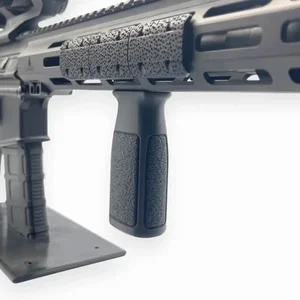
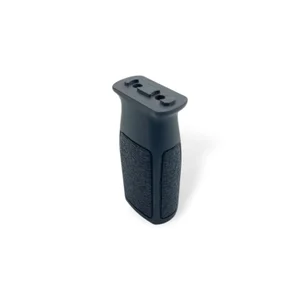
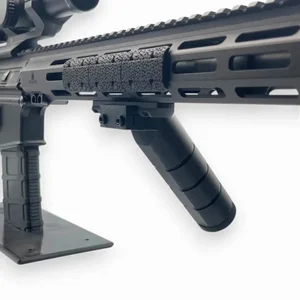
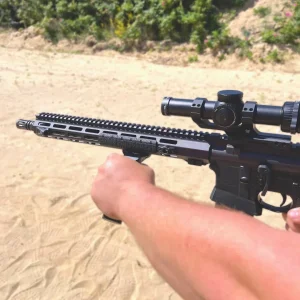
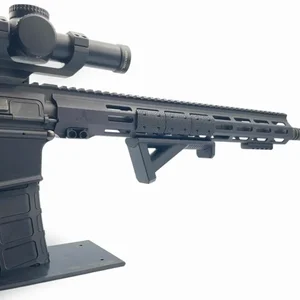
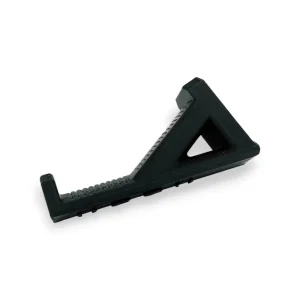
A rifle offers more options. One hand holds the pistol grip (if the rifle has one), the other – the handguard or foregrip. Angled grips are popular, such as the 45 Degree Angled Foregrip - EFT Style (RK-1 B-25U), which allow for a more natural hand position and better weapon control. Some also prefer vertical grips, like the VMX Foregrip, especially in AR15 type rifles.
Shotgun grip
A shotgun is a specific weapon. The grip is similar to a rifle grip, but due to the greater recoil, it must be even more secure. It is important to firmly brace the stock against the shoulder. You often see the so-called "push-pull", which is actively pulling the shotgun towards you during the shot.
Accessories to improve grip
Shooting accessory manufacturers know perfectly well how important the grip is. That's why you'll find plenty of accessories on the market that are designed to improve it:
- Foregrips and angled grips: Improve control over the rifle, allow for a more natural hand position.
- Pistol grip covers: Change the texture and thickness of the grip, improving grip security.
- Magwell: Facilitates quick magazine changes, especially in stressful situations (Magwell for AR-15).
It's worth experimenting with different accessories to find the ones that best suit your hand and preferences.
Grip and safety
A secure grip is the foundation of safe weapon handling. A secure grip prevents accidental dropping of the weapon and allows for a quick and effective response in emergency situations. Remember – before you even touch the trigger, make sure you have a firm and stable grip.
Grip training – how to do it?
Grip training is not just shooting at the range. You can practice your grip at home, dry fire. Just take the weapon (make sure it's unloaded!) and practice assembling for the shot, paying attention to the positioning of your hand. You can use magazine dummies (snap caps), e.g. Plastic training rounds (snap caps), to simulate magazine changes. It's also a good idea to record yourself during training – then you'll easily spot mistakes and be able to correct them. Remember to familiarize yourself with the principles of Dry Fire safety before each dry-fire training session.
Summary – the grip is fundamental
The grip in shooting seems like a trifle, but it has a huge impact on your results. The right grip means:
- Better accuracy.
- Greater weapon control.
- Less hand fatigue.
- Higher safety.
Therefore, do not underestimate this element of training. Experiment, look for your ideal grip and practice it regularly. Good luck!
Frequently Asked Questions
What is the best pistol grip for a beginner shooter?
For beginner pistol shooters, a two-handed grip is recommended, with a firm grip of the dominant hand on the handle and support from the non-dominant hand. It is important that the hands are positioned high on the handle, which helps in recoil control. The index finger should rest outside the trigger until the moment of firing.
How to choose a foregrip for an AR-15 rifle?
The choice of foregrip for an AR-15 depends on the shooter's preferences and the intended use of the rifle. Angled grips, such as the "Angled Heavy Grip" Foregrip - AFG style, provide comfortable hand support and facilitate weapon control. Vertical grips may be preferred by those who shoot dynamically or use tactical lighting.
Do accessories such as pistol grip covers really improve the grip?
Yes, pistol grip covers can significantly improve the grip, especially for people with small or large hands. They change the texture and thickness of the grip, which allows for a more secure and comfortable grip. It is worth testing different covers to find the perfect fit.
How often should I practice my weapon grip?
Practicing weapon grip should be regular, preferably several times a week. Even short training sessions (e.g. 10-15 minutes) can significantly improve the security of the grip and control over the weapon. You can practice dry, using a weapon dummy or snap caps, e.g. Dry fire cap for CMMG .22LR conversion.
Does the grip affect the accuracy of the shot?
Yes, the grip has a direct impact on the accuracy of the shot. A firm and stable grip minimizes weapon movement during the shot, which translates into better precision. An incorrect grip can cause the weapon to jerk and make it difficult to hit the target.
Are there universal grips that fit every hand?
No, there are no universal grips that would fit every hand. Every shooter has different preferences and hand structure, so it is important to experiment with different grips and accessories to find the ones that fit best. It is important that the grip is secure, comfortable and allows control over the weapon.
What are the most common mistakes made when gripping a weapon?
The most common mistakes are too weak a grip, incorrect hand positioning on the handle, jerking the weapon during the shot, and a lack of consistency in the grip. It is important to practice the grip regularly and pay attention to these mistakes to correct them.