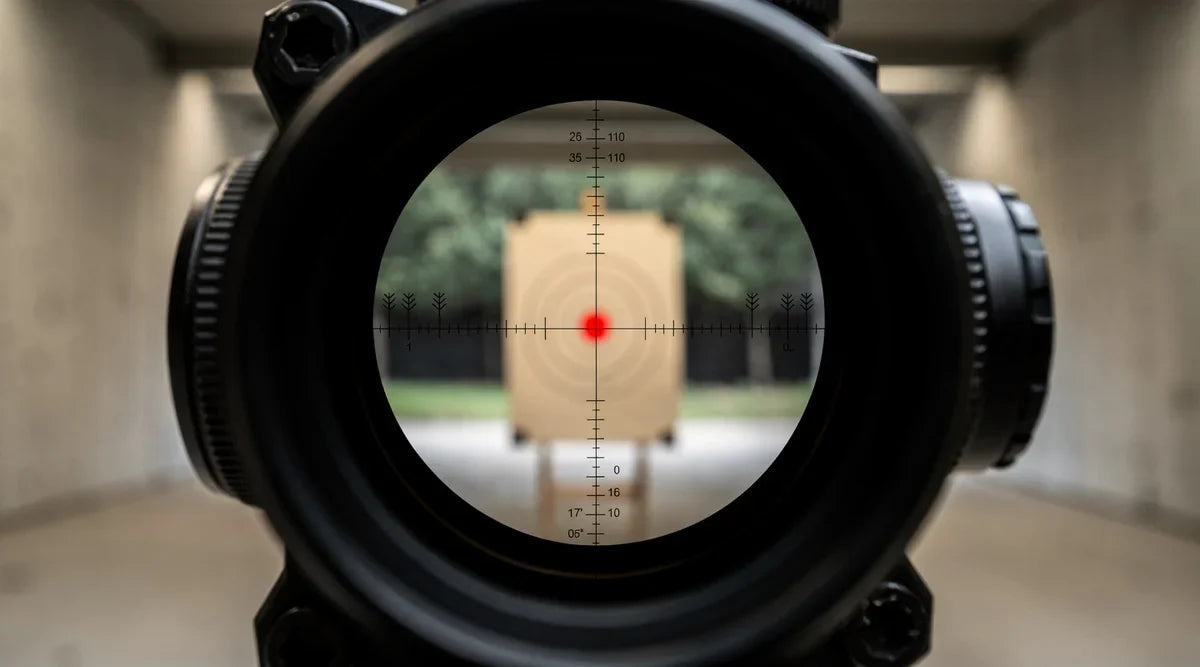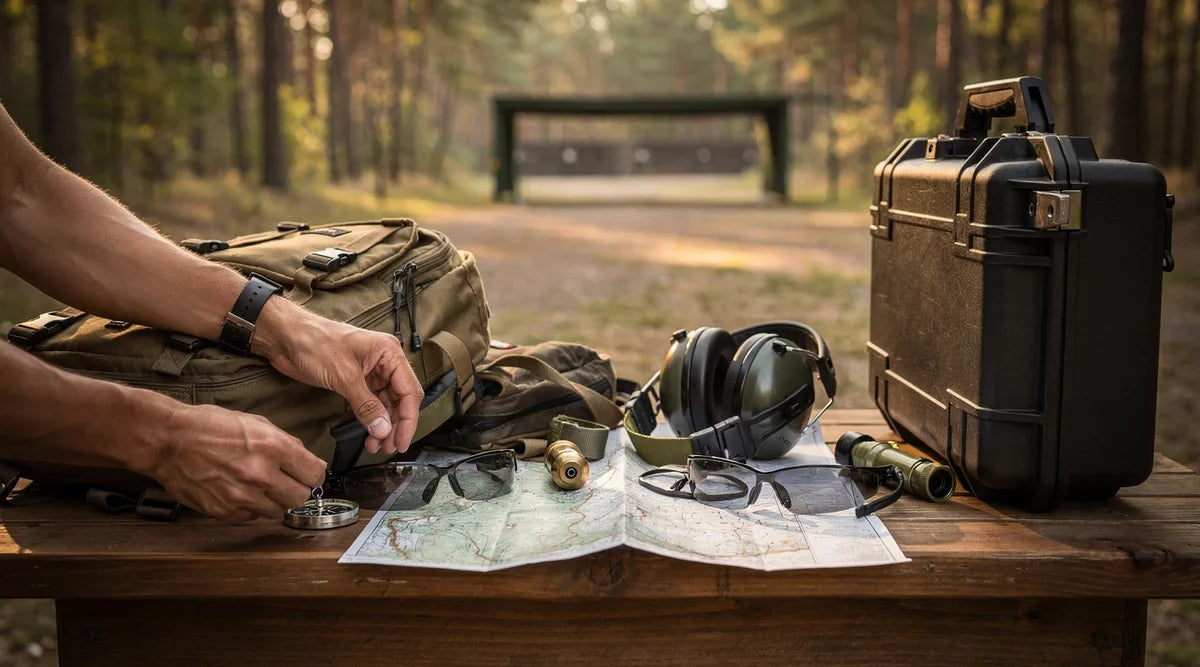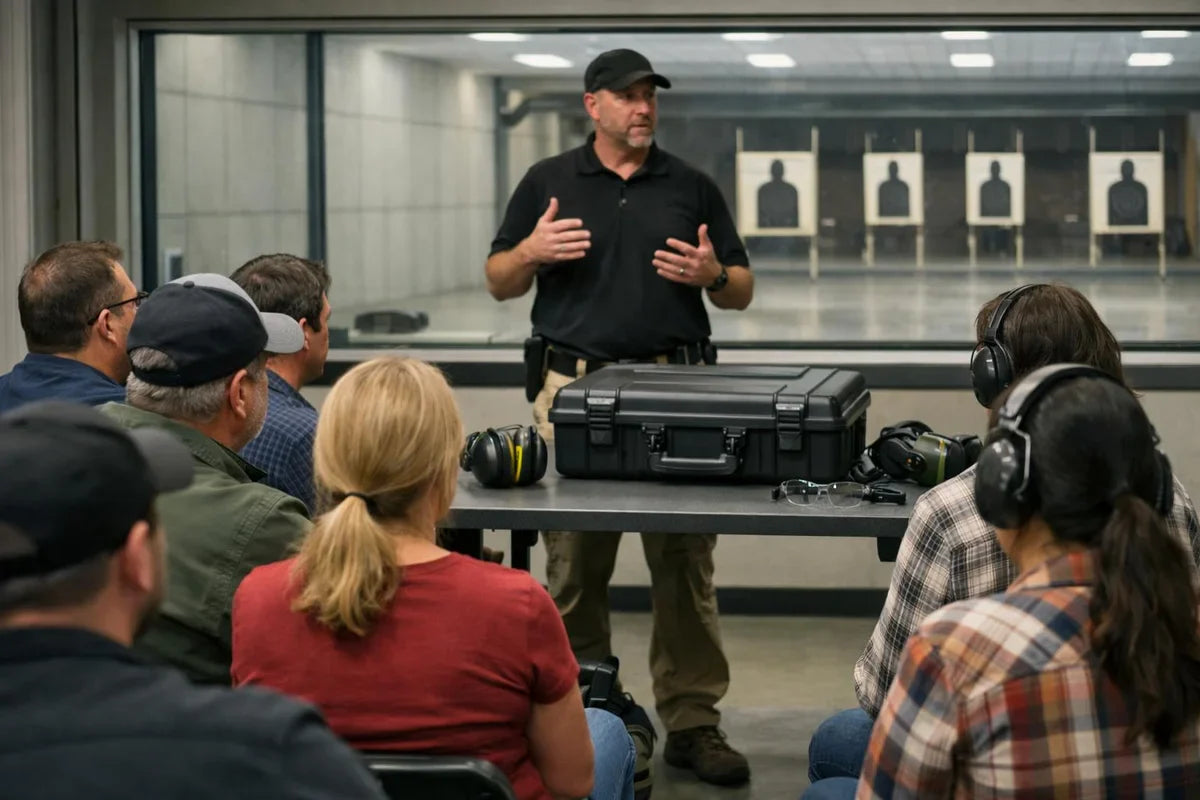
A gun permit in Poland only a few years ago was associated mainly with hunters, athletes, or collectors. After Russia’s attack on Ukraine, the topic moved out of its niche. Shooting ranges in Poland began operating at full capacity, sports clubs recorded increased interest, and conversations about firearms moved from industry forums to family tables.
This growth is not just a “militaria fad.” Behind it are specific emotions: fear, the need for control, a sense of responsibility for family, but also simple curiosity. Some people came to the shooting range for a one-time chance to become familiar with firearms. Others stayed for years, obtaining a sports or collector’s permit.
In short: the number of gun permits and the number of firearms in civilian hands were already rising before 2022, but the war across the border strongly accelerated interest in firearms in Poland. The greatest momentum can be seen in sports and collector’s permits, and the boom at shooting ranges has changed the profile of trainees: there are more women, people aged 40+, and people who do not simply want to “shoot for fun,” but to learn safe handling.
Growth in gun permits: what do the numbers say?
The change is most visible in data on the number of firearms. In 2019, there were 551 thousand firearms in Poland. In 2020, that number rose to 587 thousand, and by the end of 2021 it exceeded 658 thousand. These are still figures from before the full effect of the war in Ukraine.
At the end of 2021, police statistics listed over 250 thousand people possessing firearms, while the total number of firearms amounted to 658,379. The trend then accelerated, driven among other things by interest in training, sports clubs, collecting, and procedural facilitations for some uniformed services communities and the Territorial Defence Forces.
If you are interested in the formalities, a good starting point is our guide: how to obtain a gun permit in Poland. Here, we focus on the trend and on what is happening around shooting ranges.
Number of gun permits by purpose at the end of 2021
| Permit purpose | Number of permits | Number of firearms | What the trend shows |
|---|---|---|---|
| Hunting | 132,501 | 356,595 | A stable, traditional base of firearm owners |
| Sport | 45,895 | 123,076 | The fastest-growing area; clubs are experiencing strong interest |
| Collector’s | 39,529 | 132,982 | A very popular path for people building their own collections |
| Personal protection | 31,419 | 35,841 | Less significant than sport and collecting |
| Training and other | 940 | 6,844 | The training market and private academies are growing in the background |
Why did the war across the border change attitudes toward firearms?
The date of 24 February 2022 had a strong impact on Polish thinking about security. Shooting ranges in Poland felt it immediately: people appeared who had not previously planned any contact with firearms, but wanted at least to understand the basics. How does a pistol work? How do you reload it safely? What must you absolutely not do? What does a shot really feel like, not just in a film?
The first wave was emotional. Many people wanted to “learn quickly,” preferably in one day. But shooting does not work like a course on using a coffee machine. One afternoon is enough to see how much you still do not know. Only regular firearms training provides meaningful repeatability and safety.
Over time, the panic subsided, but some people stayed. And that is the most interesting change. Shooting ceased to be solely a weekend attraction or a closed world for the “initiated.” For some Poles, it became an element of personal resilience: like a first aid course, a supply of medicine, or knowledge of how to behave in a crisis.
Boom at shooting ranges: who comes to firearms training today?
The image of the typical trainee has changed significantly. Shooting lanes are no longer occupied only by young guys enthusiastic about gear. There are more women, couples, employees sent by companies for courses, and people over forty who had no real contact with firearms at school or in the army.
The sources contain an interesting observation: women once made up about 20% of clients, whereas today, in advanced dynamic courses or battlefield medicine courses, they can account for more than one third of participants. This is not a cosmetic change. It is a sign that interest in firearms in Poland is no longer strongly dominated by one gender.
Instructor Andrzej Idzikowski, a former police officer from the Police Training Centre in Legionowo, pointed out in a TOK FM interview that women at the shooting range are often very precise because they listen carefully to the instructor’s commands and reproduce them meticulously. Men, as he jokingly noted, are sometimes hindered by the belief that they “already know how.” The shooting range quickly verifies ego. A paper target does not applaud confidence.
The 40+ generation is catching up
A separate group consists of people born in the 1980s, who missed the old model of widespread contact with the military and had no practical familiarity with firearms at school. Today, some of them treat training as a way to make up for gaps. Not to play commando, but so as not to be completely green.
This is clearly visible in the types of courses. Static shooting at a paper circle from 25 metres is no longer enough for many people. Dynamic classes, handling firearms under stress, shooting on the move, and low-light training using flashlights or night vision have become popular. Of course, all of this takes place in a legal, sporting, and training context, at facilities intended for that purpose.
It is worth remembering that the foundation is still safety: a safe direction, finger control, awareness of the firearm’s condition, and discipline at the position. Without this, meaningful training makes no sense, regardless of how impressive the course name sounds.
Access to firearms in Poland: sport, collecting, and emotions around liberalisation
The discussion about access to firearms in Poland returns regularly, especially when the sense of threat grows. Some say: citizens should have an easier path to firearms. Others respond: a firearm is a responsibility, not a safety gadget. Both sides touch on a real problem, but they often speak from a place of emotion.
The data shows that in practice, sports and collector’s permits have gained the most momentum. A permit for personal protection, although present in the statistics, is not the axis of the entire boom. Many new owners start with a club, training, exams, and collecting specific models. If you want to follow articles in this category, check the tag gun permit.
The market also shows a side effect of the growth: higher demand for ammunition. At the peak, components and ready-made cartridges were in short supply, and calibres such as 7.62 mm or 5.56 mm / .223 Rem. were especially difficult to obtain. Availability has stabilised, but prices have remained high. In plain language: shooting is addictive, but your wallet feels the recoil too.
Safety and firearms: why do owners often “cool down”?
The most interesting paradox is this: some people, after obtaining a permit and learning the realities, become calmer rather than more confrontational. Andrzej Idzikowski said that many people, after understanding what a firearm is and within what framework it may be used in Poland, simply “cool down.” They avoid road conflicts, random tensions, and situations that could escalate.
This is important because a firearm is not a magical talisman. The instructor emphasised that a firearm is a last resort. Merely showing a firearm may not stop a determined attacker, and in addition the other side does not always know whether they are seeing a real firearm or a replica. In Poland, replicas can look very similar to firearms, so people’s reactions are unpredictable.
That is why a responsible firearm owner does not look for opportunities to use it. Rather, they do everything to ensure such a situation never happens. It is less cinematic, but much more sensible. A firearm gives possibilities, but takes away carefreeness. Whoever understands this usually stops acting tough.
Dry fire and handling basics instead of blasting away
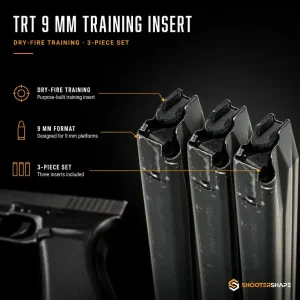
Growing interest in firearms does not mean every training session has to begin with live ammunition. A lot of work can be done dry: grip, presentation, trigger work, sight control, and safety procedures. Such training makes sense only when it is conducted methodically and without shortcuts.
If someone starts practising outside the shooting range, they should first work through the basics of safety. The article Dry Fire Safety: What You Need to Know Before You Start Dry Fire Training will be helpful. This is not a side topic, but an absolute foundation, especially with the growing number of new owners.
Schools, companies, and private academies: shooting has moved beyond the club
The change does not end at private shooting ranges. Secondary schools have Education for Safety, which covers not only theory, but also the basics of aiming, safe handling using ASG replicas or air guns, and pre-medical first aid. This does not turn students into shooters, but it familiarises them with rules and responsibility.
Business has joined in as well. Firearms training appears as an employee benefit or as part of loyalty programmes in large organisations, including in the energy, forestry, and postal sectors. Employees themselves request such courses, treating them as part of civil resilience.
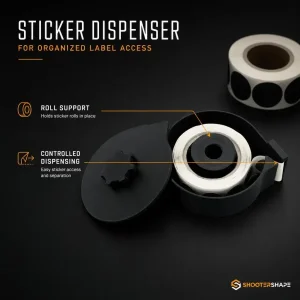
At the same time, private training companies and academies are growing. The market quickly filled the gap left by government announcements such as “a shooting range in every county,” which did not fully meet expectations. Private facilities, instructors, and clubs have taken on the burden of practical education. For shooting ranges and instructors, this also means greater organisational demands: groups must be led efficiently, clearly, and without chaos. In this context, well-chosen equipment for shooting ranges, clubs, and instructors comes in useful.
What does this trend mean for the market and for the ordinary shooter?
First: shooting ranges in Poland will continue to compete for available slots, instructors, and good organisation. The boom at shooting ranges is no longer based solely on one-off gift vouchers. More and more people want to train regularly, join a club, obtain a licence, get a permit, and then develop their skills.
Second: the growth in gun permits shifts the conversation from “is it allowed?” to “how do we do this responsibly?” That is a good change. Access to firearms in Poland alone does not solve the problem of safety. It is solved only by combining regulations, training, a safety culture, and awareness of consequences.
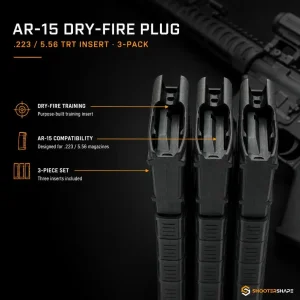
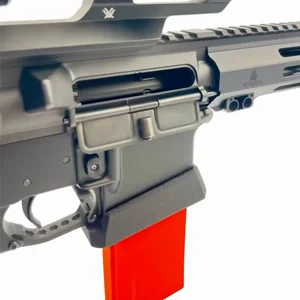
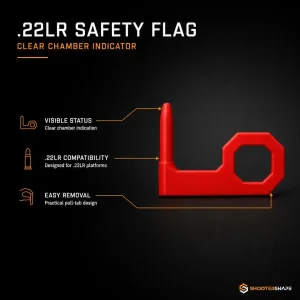
Third: the market for accessories, storage, equipment organisation, and dry-fire training will grow together with the number of users. A new owner quickly discovers that the firearm is only the beginning. Then come: ammunition, a safe, magazine organisation, hearing protection, cleaning, safety flags, targets, dry-fire training, and a mass of small items that make the difference between chaos and an organised shooter’s setup.
The most important thing, however, remains simple: a firearm requires a cool head. And paradoxically, that cool head may be the greatest positive effect of the current boom.
Frequently asked questions
Is the number of gun permits in Poland really growing quickly?
Yes. The data shows a clear increase in the number of firearms: 551 thousand in 2019, 587 thousand in 2020, and over 658 thousand by the end of 2021. After 2022, interest accelerated further, mainly because of the war in Ukraine and a greater need for training.
Which permits are currently the most popular in the growth trend?
The greatest momentum can be seen in sports and collector’s permits. At the end of 2021, there were 45,895 sports permits and 39,529 collector’s permits. Hunting permits remained the largest traditional category.
Why are shooting ranges in Poland experiencing a boom?
The strongest impulse was the war in Ukraine. Some people came out of concern for safety, some out of curiosity, and some stayed longer and began training regularly. Shooting has ceased to be perceived as a very niche hobby.
Does a firearm increase the sense of security?
It can provide a greater sense of control, but instructors emphasise that a firearm is a last resort. Andrzej Idzikowski pointed out that many people, after learning the legal and practical realities, become calmer and avoid conflicts.
Who is most often learning to shoot today?
At shooting ranges, there is a broader group than before: women, people aged 40+, couples, company employees, and people interested in civil resilience. Women, who once made up about 20% of clients, can now account for more than one third of participants on some advanced courses.
Is one day of firearms training enough?
One day allows you to learn the basics and see how a firearm works, but it does not provide full skills. Safe and confident firearm handling requires repetition, instructor correction, and regular training.
Is ammunition easily available today?
According to the information cited, availability has stabilised after a period of shortages, but prices have remained high. Problems with popular calibres such as 7.62 mm and 5.56 mm / .223 Rem. were particularly noticeable.
Does greater access to firearms mean greater safety?
Access alone is not enough. Safety and firearms are primarily about training, discipline, knowledge of rules, and awareness of consequences. A firearm in the hands of a responsible person requires a cool head, not emotional decisions.
Sources
- wyborcza.pl/7,75398,32781292,lawinowy-wzrost-liczby-wydawanych-pozwolen-na-bron-na-strzelnicy.html
- tokfm.pl/ludzie/czy-posiadanie-broni-przynosi-nam-poczucie-bezpieczenstwa-ci-ludzie-stygna
- igryfino.pl/artykul/38916,pozwolenie-na-bron-w-polsce-zobacz-jak-zmienily-sie-statystyki-i-kto-teraz-uczy-sie-strzelac