Examinations for a firearms permit sound like an unpredictable selection process to many candidates: some fear poor eyesight, others past therapy or a single diagnosis in their records. Meanwhile, the procedure has a specific structure. A candidate needs two independent documents: a medical certificate and a psychological certificate.
In an account presented during the Warsaw Defence Fair, Dr. Marek Popiel of the Military Institute of Aviation Medicine emphasized that the rules are not hidden knowledge available only to insiders. The scope and criteria of the assessment result from regulations, not from the discretionary “whim” of a doctor’s office. This is important information for people who type “firearms permit 2026” into a search engine and try to separate facts from stories heard at the shooting range.
This does not mean that the examination should be treated as a formality. Its purpose is very specific: to assess whether a person’s health condition allows them to possess and handle firearms safely. Reliable preparation therefore consists not in guessing the answers, but in understanding the stages and calmly approaching one’s own medical history.
What do examinations for a firearms permit look like: two certificates, not one “test”
First, it is worth clarifying a basic matter: there is no single examination that completes the entire procedure. It is based on two pillars:
- a psychological examination, concluded with a psychological certificate;
- a medical examination, concluded with a medical certificate.
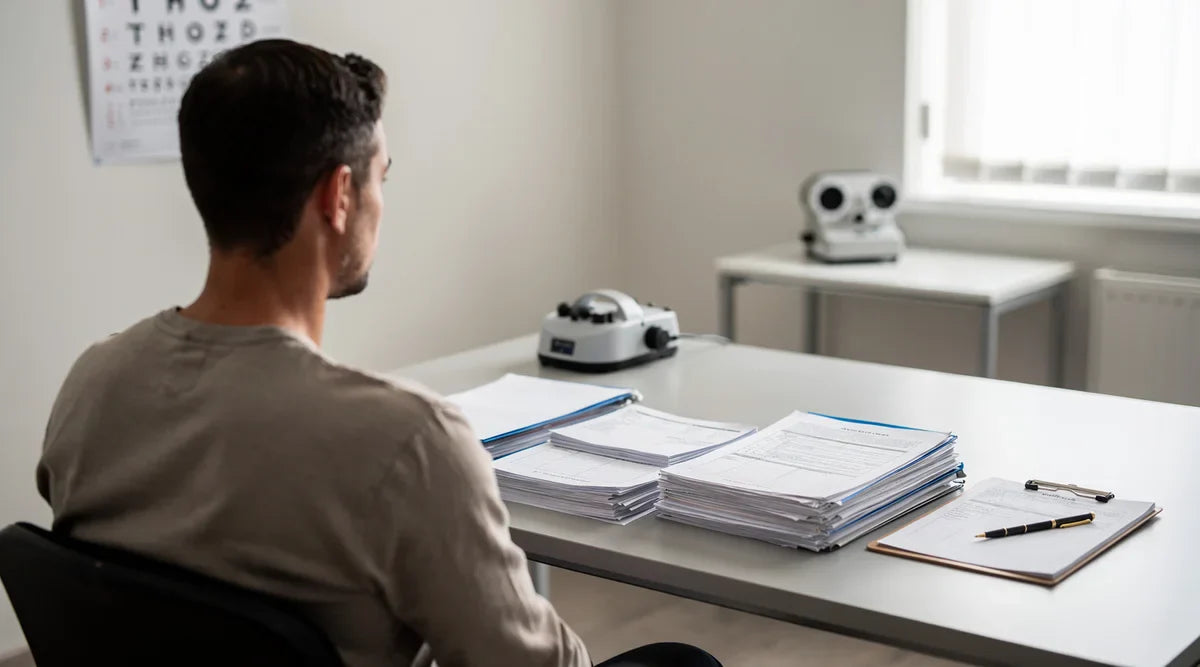
Psychological examinations for firearms include tests and an interview with an authorized psychologist. The medical part is organizationally broader, as it requires specialist consultations and additional tests, while the final certificate is issued by a certifying physician.
This distinction has practical significance. The phrase “I passed the psychologist” should not be treated as shorthand for completing the entire medical pathway. Only the full set of both documents meets the required structure of the procedure. Materials tagged gunpermit also provide broader formal context.
Myth: the examinations are a multi-day marathon of clinic visits
Reality: the list of offices is indeed not short, but at modern centers the procedure can be completed within a single day, in a few hours. It is more an intensively planned day than a multi-week medical odyssey.
The mandatory package includes consultations with:
- an ophthalmologist — concerning vision parameters,
- a neurologist,
- an ENT specialist,
- a surgical and orthopedic specialist,
- an internal medicine physician.
There are also two additional tests: blood glucose measurement and an ECG. This set shows that medical examinations for a firearms permit are not merely a vision-acuity check and a signature at the end of a form. The assessment concerns different areas of health.
Myth: nearsightedness or diabetes immediately disqualifies an application
Reality: a diagnosis itself does not necessarily automatically mean a negative result. The cited position of WIML emphasized the role of individual assessment, correction, and monitoring of health status.
Vision impairment: the possibility of correction matters
Nearsightedness was not presented as an automatic obstacle to firearm ownership. If the impairment is corrected, it may not pose a problem. This is a simple but important counterpoint to one of the most common myths about firearms examinations: that any departure from perfect health eliminates a candidate.
Type 1 diabetes: disease control is important
According to the source, type 1 diabetes is also not an absolute contraindication. Proper control, regular examinations, and consultations are important. In certain situations, an opinion from a diabetologist on the course of the disease and blood glucose levels may be needed.
The practical conclusion is this: do not assume on your own that a medical history “closes the matter.” Do not assume the opposite either — that every situation will be treated identically. Certification medicine assesses a specific case, not an online diagnostic label.
Mental health and medication: where the myth of automatic refusal ends
Mental health is probably the subject that raises the most emotions and, consequently, the most oversimplifications. The source clearly indicates that paranoid schizophrenia is an absolutely disqualifying condition. At the same time, depressive symptoms were not described as an automatic basis for refusal.
If a candidate takes antidepressants or sleeping medication, their history and treatment are subject to thorough, individual assessment by a psychiatrist. Therefore, it is impossible to honestly answer online in a single sentence: “medication means refusal” or “medication has no significance whatsoever.” Both answers ignore the fact that every case is assessed separately.
In the psychological part, there is no point in playing a role or looking for an “ideal profile” in online advice. The tests and interview are used for assessment by an authorized psychologist. Honesty and a consistent presentation of one’s health situation are a more sensible approach than trying to guess the key.
What the data say: refusal is not the norm
According to WIML’s experience over the last five years, approximately 500 people were examined annually, and less than 5% of examinations ended with a negative certificate. This is not a guarantee of an outcome for a particular person — health is always assessed individually — but the number effectively cools the claim that nearly every candidate is rejected at the medical stage.
If the result is negative, the procedure does not end definitively on the day the document is received. There are two weeks to submit an appeal to a higher-level unit. Following an in-depth analysis of the health situation, the second-instance certificate may be changed to a positive one.
An intermediate option is also possible. In the case of progressive eye diseases, such as cataracts, a physician may shorten the validity period of the examinations and refer the person for an earlier follow-up consultation instead of refusing certification. The source also indicates that an older person whose health has deteriorated to the point of preventing safe handling of firearms may undergo the examinations again after successful surgery.
Validity of certificates: five years, a sports exception, and a different schedule for security work
As standard, medical and psychological certificates remain valid for 5 years. Members of the Polish Sport Shooting Association are currently exempt from repeating examinations every five years.
However, this rule should not be applied to every firearm-related activity. In the case of qualified physical security personnel, the scope of examinations is almost the same, but the legal basis is the Act on the Protection of Persons and Property, and the examinations must be renewed every 3 years.
This is a detail that is easy to get wrong, especially when someone confuses the status of a sport shooter with the requirements of a security guard profession. If you are planning further formalities, materials tagged gunExam may also be useful. And once the formal matters are behind you, it is worth building good habits from the beginning — including by learning the rules of Dry Fire Safety: What You Need to Know Before You Start Dry Fire Training.
The shortest checklist: how to approach the examinations without unnecessary stress
- Separate facts from stories. Vision impairment, diabetes, or psychiatric treatment do not have one universal answer for every person.
- Remember the two documents. Psychological and medical examinations are separate elements of the required procedure.
- Expect an intensive day. The package includes specialists, glucose testing, and an ECG, but at a properly organized center it can be completed in a few hours.
- Do not treat a negative result as a dead end. There is an appeal route within two weeks.
- Check your status. The five-year rule, the exception for PZSS members, and the three-year cycle for security guards are three different situations.
The biggest mistake is paralysis caused by rumor. The examinations are intended to verify a real ability to safely possess and handle firearms, not to catch people who wear glasses or have undergone treatment. That is precisely why documents, consultations, and individual assessment matter in this procedure.
Frequently asked questions
What do examinations for a firearms permit look like?
Two separate certificates are required: psychological and medical. The psychological examination includes tests and an interview with an authorized psychologist, while the medical part includes specialist consultations and additional tests.
What consultations are included in medical examinations for a firearms permit?
The mandatory package includes consultations with an ophthalmologist, neurologist, ENT specialist, surgical and orthopedic specialist, and internal medicine physician. Blood glucose testing and an ECG are also performed.
Does vision impairment prevent obtaining a certificate?
Not necessarily. According to the information presented, nearsightedness may be corrected and then may not pose a problem.
Does type 1 diabetes mean automatic refusal?
No. Type 1 diabetes is not an absolute contraindication if it is properly controlled. In some cases, an opinion from a diabetologist concerning the course of the disease and blood glucose levels may be needed.
Do antidepressants or sleeping medication always disqualify a candidate?
There is no automatic rule here. Medical history and the use of such medication are assessed individually and thoroughly by a psychiatrist. However, the source identifies paranoid schizophrenia as an absolute contraindication.
How many people receive a negative certificate?
In WIML’s experience over the past five years, approximately 500 people were examined annually, and less than 5% of examinations ended with a negative certificate.
Can a negative certificate be appealed?
Yes. The deadline for filing an appeal with a higher-level unit is two weeks. Following an in-depth analysis, the second-instance certificate may be changed to a positive one.
How long are firearms permit examinations valid?
As standard, medical and psychological certificates are valid for 5 years. Members of PZSS are currently exempt from the requirement for periodic examinations every five years, while qualified physical security personnel undergo examinations every 3 years.