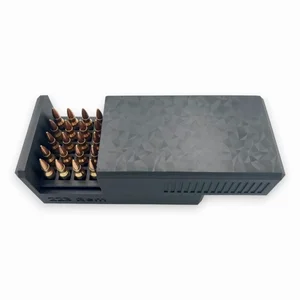
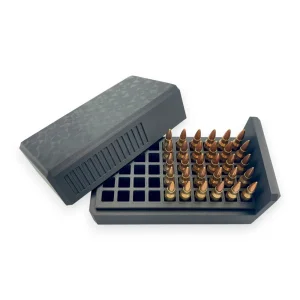
5.56 – what does it actually mean? Simply put, it is the designation of a cartridge caliber, specifically 5.56x45 mm NATO. It is one of the most popular rifle calibers in the world, widely used both in the military and in sport and recreational shooting. It is characterized by a high initial projectile velocity and a relatively flat trajectory, which translates into good accuracy at medium distances.
What is behind the number 5.56?
The designation 5.56 refers to the diameter of the projectile, expressed in millimeters. In this case, the projectile has a diameter of 5.56 mm. The second number, 45, indicates the length of the cartridge case – 45 mm. The full designation, 5.56x45 mm NATO, indicates that it is a standard cartridge used by NATO forces.
It is worth noting that the 5.56x45 mm NATO cartridge is very closely related to the .223 Remington cartridge. Both cartridges have identical dimensions, but differ in the permissible pressure in the chamber. For this reason, although visually identical, they are not always interchangeable – using 5.56 NATO ammunition in a rifle designed exclusively for .223 Rem can be dangerous.
History and development of the 5.56 caliber
The 5.56 caliber was born in the 1960s as a response to the need for lighter and more effective ammunition for automatic rifles. The US Army was looking for a successor to the 7.62x51 mm NATO cartridge, which was the standard at the time. The new cartridge was to be lighter, allowing soldiers to carry more ammunition, while providing sufficient firepower.
The first rifle to use 5.56 ammunition was the AR-15, later adopted by the US Army as the M16. Since then, the 5.56 caliber has become the standard in many armies around the world and is commonly used in rifles such as the M4, HK416, and many others.
Application of 5.56 in shooting
5.56 ammunition is widely used in various shooting disciplines:
- Sport shooting: The 5.56 caliber is popular in dynamic competitions, such as IPSC and 3-Gun (3-Gun), where speed and accuracy count.
- Recreational shooting: Rifles in 5.56 caliber are often chosen for shooting ranges due to their availability, relatively low ammunition cost, and enjoyment of use.
- Tactical shooting: The 5.56 caliber is used by law enforcement and special units for training and combat operations.
- Hunting: In some countries, where permitted, 5.56 ammunition is used for hunting smaller game.
Advantages and disadvantages of the 5.56 caliber
Like any caliber, 5.56 has its strengths and weaknesses:
Advantages:
- Flat trajectory: Makes it easier to aim at various distances.
- High initial velocity: Increases projectile energy and improves accuracy.
- Relatively low recoil: Makes it easier to control the rifle and fire subsequent shots faster.
- Availability and price of ammunition: 5.56 ammunition is widely available and relatively inexpensive compared to other rifle calibers.
Disadvantages:
- Lower stopping power: Compared to larger calibers, such as 7.62x51 mm NATO, 5.56 ammunition has less stopping power at longer distances.
- Sensitivity to wind: A lighter projectile is more susceptible to wind, which can affect accuracy at longer distances.
Accessories for weapons in 5.56 caliber
Weapons in 5.56 caliber, especially AR-15 type rifles (AR15), are characterized by a huge availability of accessories. The ability to personalize and adapt the rifle to your own needs is one of its greatest advantages. Here are a few examples:
- Optics: Red dot sights (red dot sights), rifle scopes, magnifiers – the choice is huge and depends on the shooter's preferences and the purpose of the weapon.
- Grips: Foregrips (foregrips), angled grips (angled grips) – improve ergonomics and weapon control.
- Stocks: Adjustable stocks (adjustable stocks) allow you to adjust the length of the rifle to the shooter's body size.
- Handguards: Various types of handguards are available, including handguards with the M-LOK system (M-LOK) or KeyMod (KeyMod), which allow the mounting of additional accessories.
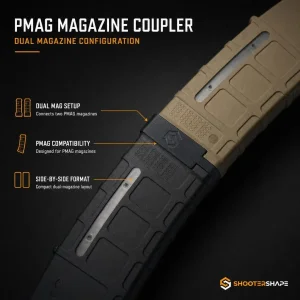
- Magazines: Magazines of various capacities are available, made of various materials (e.g. steel, polymer).
- Cleaning accessories: Regular cleaning (cleaning) is key to maintaining the reliability and accuracy of the weapon.
5.56 vs. other calibers
When comparing 5.56 with other popular rifle calibers, it is worth paying attention to a few aspects:
- 7.62x39 mm: Caliber used in AK rifles (AK). It is characterized by greater stopping power than 5.56, but has a worse trajectory and greater recoil.
- .308 Winchester: Caliber used in sniper and hunting rifles. It provides high stopping power and good accuracy at long distances, but has even greater recoil than 7.62x39 mm.
- .22 LR: The .22 LR caliber (.22 LR) is a popular rimfire caliber, used mainly for training and recreation. It is much weaker than 5.56, but is characterized by a very low ammunition cost and minimal recoil.
Summary
The 5.56 caliber is a versatile and popular choice for sport, recreational, and tactical shooters. Its advantages, such as a flat trajectory, high initial velocity, and ammunition availability, make it attractive to a wide range of users. When choosing a weapon in 5.56 caliber, it is worth remembering its limitations, such as lower stopping power at longer distances.
Frequently Asked Questions
Is .223 Remington ammunition interchangeable with 5.56 NATO?
Technically, .223 Remington and 5.56 NATO ammunition have identical dimensions, but they are not always interchangeable. The 5.56 NATO cartridge generates higher pressure in the chamber. Using 5.56 NATO ammunition in a weapon designed exclusively for .223 Rem can be dangerous. You should always check the markings on the weapon and follow the manufacturer's recommendations.
Which 5.56 caliber rifle should I choose to start with?
The choice of a 5.56 caliber rifle depends on individual preferences and budget. Popular options include the AR-15 (AR15) (due to its modularity and availability of accessories), as well as rifles from other manufacturers, such as the HK416 or SIG Sauer M400. Before buying, it is worth trying on different models and checking which one fits best in your hand.
How to care for a 5.56 caliber rifle?
Regular cleaning and maintenance are key to the longevity and reliability of a 5.56 caliber rifle. After each shooting, remove carbon deposits and dirt from the barrel, bolt, and other parts. You should also regularly lubricate the moving parts of the weapon. You can use special weapon cleaning kits for cleaning and maintenance.
Is a permit required to own a 5.56 caliber weapon?
Yes, in Poland, to own a 5.56 caliber weapon, as with most firearms, it is necessary to have a weapons permit. The exception is ASG replicas, which are not weapons under the law.
What accessories are worth buying for a 5.56 caliber rifle?
The choice of accessories for a 5.56 caliber rifle depends on individual needs and preferences. It is worth considering buying a red dot sight or rifle scope, a foregrip, an adjustable stock, and spare magazines. Accessories for cleaning and maintaining the weapon, such as a bore snake, may also be useful.
Where can you shoot a 5.56 caliber weapon?
You can shoot a 5.56 caliber weapon at shooting ranges that have the appropriate permits and infrastructure. Shooting a weapon outside the shooting range is prohibited and carries criminal liability.
Is the 5.56 caliber suitable for self-defense?
The 5.56 caliber can be used for self-defense, but you should remember its high power and potential risk of over-penetration. In domestic conditions, this may pose a threat to bystanders. For self-defense in domestic conditions, a 9 mm caliber weapon or a smoothbore shotgun is often recommended.
What are the costs of maintaining a 5.56 caliber weapon?
The costs of maintaining a 5.56 caliber weapon include the cost of purchasing ammunition, cleaning and maintenance accessories, and any repair and service costs. The cost of 5.56 ammunition is relatively low compared to other rifle calibers.