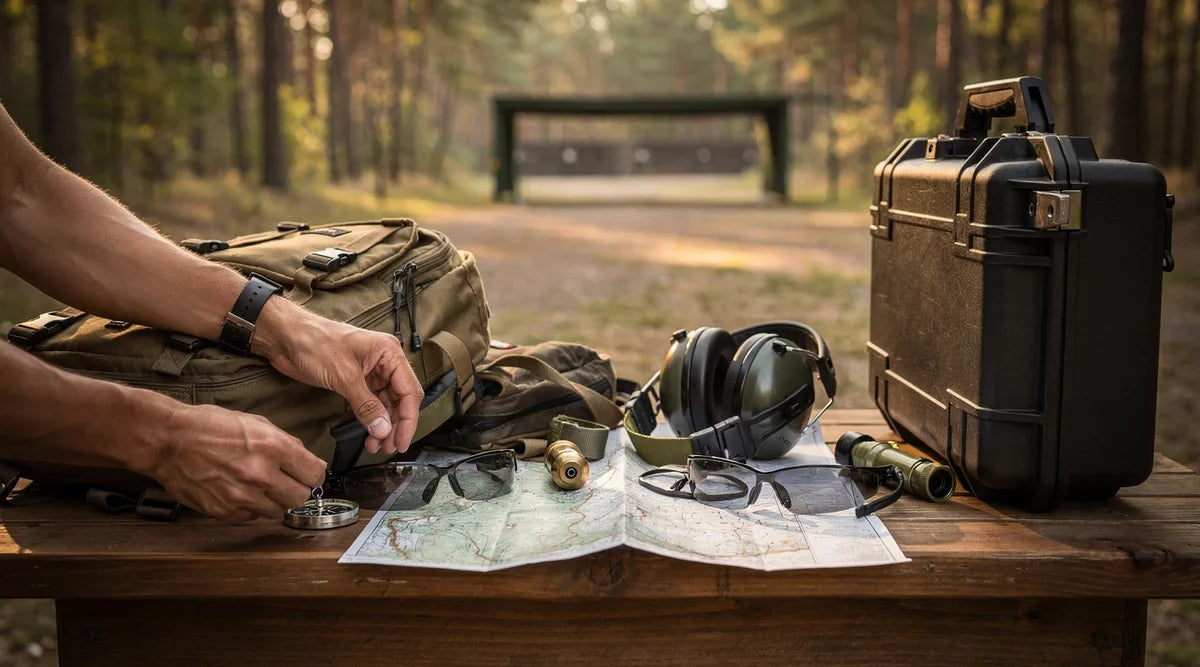
Light Infantry KSI 2026 has gone down in history after competition held between 4 and 19 July at the Zielnowo Shooting Range. The 12th edition of Light Infantry was not a single, identical scenario for everyone. The organizer prepared as many as seven categories, differing in duration, starting format, number of stages and navigation points, and, in two variants, equipment requirements as well.
It is precisely this broad format that sets KSI competitions apart. Rather than a test limited to a single station, a competitor or pair had to combine marching, shooting, navigation and completing tactical tasks. In such conditions, well-arranged equipment or quick hits are not enough. Sensible management of strength, communication and a plan that can be carried out when fatigue starts clouding the mind also matter.
12th edition of Light Infantry: seven paths to the same test
The name “Light Infantry” may suggest a single format, but the 2026 edition was designed on a much broader scale. On 4 July, four shorter variants were held: Solo, Blitz, Retro and Retro Solo. A week later, on 10–11 July, Lighter Infantry took place. The longest editions – Light Infantry and Light Infantry MILSIM – were scheduled for 17–19 July.
In practice, participants could choose the scale of the challenge according to their preferred starting format. Starting alone meant that the entire organization of activities rested on one person. Starting as a pair shifted the focus to cooperation: dividing tasks, controlling the pace and making clear arrangements. Sounds simple? As long as a person has energy to spare – yes. Later on, even a basic question such as “who is responsible for what?” is worth settling without guesswork.
Overview of Light Infantry KSI 2026 categories
| Category | Date | Approximate duration | Starting format |
|---|---|---|---|
| Light Infantry Solo | 4 July | approximately 9 hours | individual |
| Light Infantry Blitz | 4 July | approximately 9 hours | pairs |
| Light Infantry Retro | 4 July | approximately 9 hours | pairs |
| Light Infantry Retro Solo | 4 July | approximately 9 hours | individual |
| Lighter Infantry | 10–11 July | approximately 14 hours | pairs |
| Light Infantry | 17–19 July | approximately 40 hours | pairs |
| Light Infantry MILSIM | 17–19 July | approximately 40 hours | pairs |
All these variants made up one, twelfth edition of the event. This is an important distinction for those following Zielnowo’s shooting and tactical competitions: comparing the categories solely by duration would be too much of a simplification, as each had a different set of elements and its own specific character.
From nine to forty hours: what was the scale of the effort?
The shortest formats, held on 4 July, lasted approximately 9 hours. Solo included around 16 daytime shooting stages and other tactical tasks. Blitz added around 10 navigation points, while the number of daytime stages was also approximately 16. The same setup – around 16 stages and around 10 navigation points – applied to the Retro variant, enhanced with equipment requirements.
Lighter Infantry was already a clear step further: approximately 14 hours of competition, around 20 daytime shooting stages, around 20 navigation points, a mortar task and other tactical tasks. This is a category in which the schedule becomes an element of the competition itself, not merely a backdrop for shooting.
Main Light Infantry and MILSIM: the full, approximately 40-hour format
The longest outdoor shooting competitions within the edition lasted approximately 40 hours. Both Light Infantry and Light Infantry MILSIM included around 25 shooting stages held during the day, at night and in the morning, around 30 navigation points, a mortar task, a major tactical task on the first day and further tactical tasks.
The difference between these two categories did not lie in the duration or the number of listed elements. MILSIM introduced equipment requirements recreating selected equipment and rules used in the military. It was a variant for those who, beyond the result itself, wanted to take on a specifically defined equipment convention.
That is why the result in a long shooting and tactical competition is not a simple sum of results from the stages. Changing operating times, navigation tasks and the need to maintain the quality of decisions for many hours all come into play. Good form at the first stations is valuable, but it does not replace calm action at the end of a long effort.
Solo or pair? In Zielnowo, cooperation was part of the sporting stakes
The main categories of the event were designed for pairs, while the Solo and Retro Solo variants allowed participants to start individually. This is not a cosmetic difference in the entry form. In a pair, an additional resource appears – a partner – but so does the obligation to coordinate actions efficiently. Poorly used cooperation can cost time and energy; properly used, it organizes tasks.
The most sensible conclusion from this format is simple: before the start, it is worth discussing not only equipment, but also the method of communication and the sequence for completing repetitive tasks. This is not about theatrical commands. It is about not debating every minor detail when fatigue sets in. This kind of preparation can be steadily built through regular training, starting with simple, repeatable organizational procedures.
Retro and Retro Solo: a historical convention with clear equipment classes
The Retro variants were held on 4 July, in pair and individual formats. In addition to approximately 9 hours of competition, around 16 daytime shooting stages and – in the pairs competition – around 10 navigation points, they featured equipment requirements referring to military equipment and rules used up to 1945.
The event regulations specified three equipment classes: bolt-action rifle, self-loading rifle and intermediate-cartridge rifle, with the firearm required to have entered service no later than 1945. This precisely defined the framework of Retro and distinguished this variant from the other categories.
It is worth noting that in a field-task format, equipment is only one piece of the puzzle. Even the most impressive setup will not solve the issue of finding a navigation point or create a plan for the competitor for the next several hours. Such a format rewards consistent preparation, not a single “magic” piece of equipment.
What does the KSI competition format say about preparation for the start?
The program of the 12th edition clearly showed that shooting was one of several pillars, rather than the only task. Stages, navigation points, marching and tactical tasks created a test in which preparation must be understood more broadly than training for results on target alone.
- Planning: longer categories required sensible allocation of strength and attention.
- Navigation: in Blitz, Retro, Lighter Infantry and both longest categories, navigation points were a specified part of the program.
- Resistance to fatigue: the organizer explicitly grounded the idea of the competition in verifying skills acquired during courses and training under considerable exertion.
- Cooperation: pair categories required working with a partner, rather than two independent starts alongside each other.
This approach places Light Infantry alongside events in which a sporting result grows from the combination of fitness, organization and conscious training. The broader context of how competition combines results with fitness and cooperation is also described in the article “The military and uniformed services are placing greater emphasis on shooting: competition, fitness and remembrance”.
Zielnowo Shooting Range as an arena for shooting and tactical competitions
The Zielnowo Shooting Range was the venue for this year’s entire edition. The schedule, stretching from 4 to 19 July, made it possible to organize separate dates for the four short variants, Lighter Infantry and the two longest categories. As a result, “Light Infantry” covered both one-day individual and team starts, as well as an extensive, approximately 40-hour competition for pairs.
For an observer, the scale of choice remains the most important aspect. Those looking for a shorter sporting challenge had Solo, Blitz or the Retro variants. Those wishing to take on a longer format with navigation and tasks spread over many hours could choose Lighter Infantry or the full Light Infantry. MILSIM additionally brought separate equipment requirements. The seven categories were therefore not merely a decorative part of the program, but a way of creating genuinely different competition experiences.
The 12th edition of Light Infantry proved through the very construction of its program that KSI competitions are more than a series of stages. In Zielnowo, competition had different paces, durations and rules, but the common core remained the same: to test how knowledge from courses and training works when it must be combined with movement, planning and exertion. No shortcuts – and that is precisely what this format is about.
Frequently asked questions
When did Light Infantry KSI 2026 take place?
The 12th edition was held between 4 and 19 July 2026. Individual categories had separate dates: 4 July, 10–11 July or 17–19 July.
Where were the Zielnowo shooting and tactical competitions held?
The event took place at the Zielnowo Shooting Range, in the Pomeranian Voivodeship.
How many categories did the 12th edition of Light Infantry include?
The program included seven variants: Lighter Infantry, Light Infantry, Light Infantry MILSIM, Solo, Blitz, Retro and Retro Solo.
Which Light Infantry KSI 2026 categories were individual?
Participants could start individually in Light Infantry Solo and Light Infantry Retro Solo. The other listed categories were held in pairs.
How long did the longest competition last?
Light Infantry and Light Infantry MILSIM lasted approximately 40 hours. Both categories were held from 17 to 19 July.
What did the longest KSI competitions include?
The program included around 25 daytime, nighttime and morning shooting stages, around 30 navigation points, a mortar task, a major tactical task on the first day and other tactical tasks.
How did the MILSIM variant differ from Light Infantry?
Both categories had the same stated approximate duration and program elements. MILSIM additionally required equipment recreating selected elements of military gear and rules used in the military.
What equipment requirements applied in Retro?
Retro and Retro Solo required equipment recreating military gear and rules used up to 1945. Permitted classes included bolt-action rifles, self-loading rifles and intermediate-cartridge rifles that entered service no later than 1945.